 |
public class HelloPrinter
{
   public static void main(String[] args)
   {
	int a = 3;
	int count = 1;

	while( a > 0)
	{
           ++count;
	   a--;
 	   System.out.printf("%d\n", count);
	}
   }
}
_________________________________ a = 3 count = 1 while a>0: count += 1 a -= 1 print(count, end=", ") print() What is the output? |
public class HelloPrinter
{
   public static void main(String[] args)
   {
	int a = 3;

	while( a > 0)
	{
    	   int count = 1;
           ++count;
	   a--;
 	   System.out.printf("%d\n", count);
	}
   }
}
___________________________________________________
a = 3
while a>0:
    count = 1
    count += 1
    a -= 1
    print(count, end=", ")
print()
What is the output? |
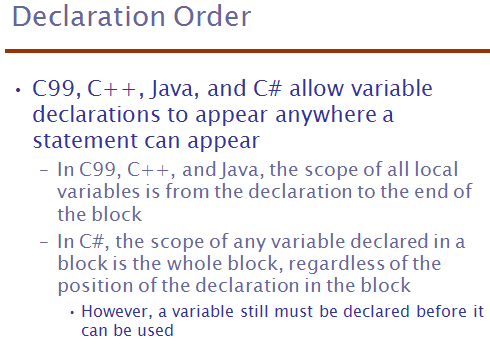
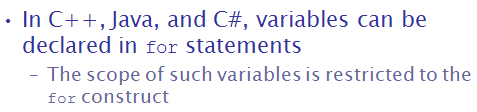
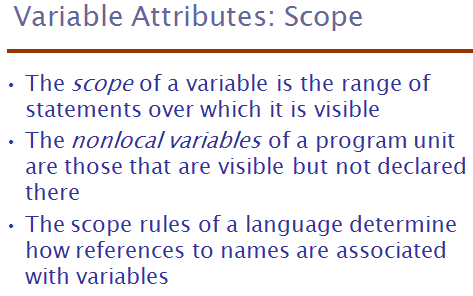
Scope:
Scope of a
program variable is the range of statements in which the variable is
visible or can be referenced in that statement.
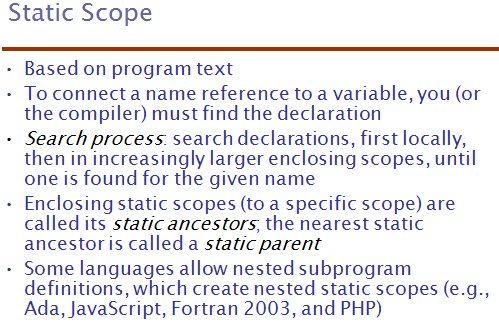
local variables - where it is declared. It is declared local to the program unit or block.
nonlocal variables - are visible but not declared in that block or program unit where it is referenced.
Example:
e.g. Page 200
| procedure
big;
var x : integer;
...... end; {big} |
e.g. Page 201
| program main;
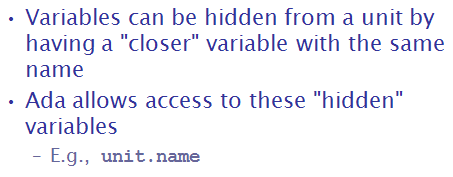
var x : integer; x is hidden here.
... end. {main} |
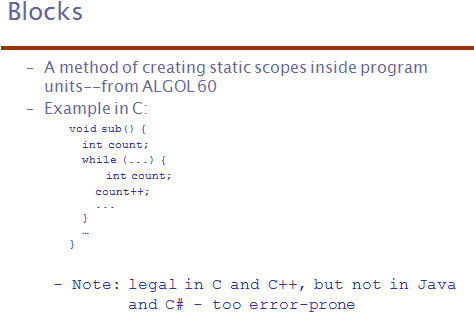
How to access hidden variable:Blocks:
Ada: main.x
C++: :: (scope operator)C++, C use global variables to pass declaration to subprograms.
Pascal has nested subprogram, but C++ does not.
{
....
}
Variable declared in block is a stack
dynamic variable.
The storage is allocated when section
is entered and deallocated when section is exited.
Read Section 5.8.3 and figures 5.1, 5.2, 5.3 and 5.4 to see some problems with static scope.
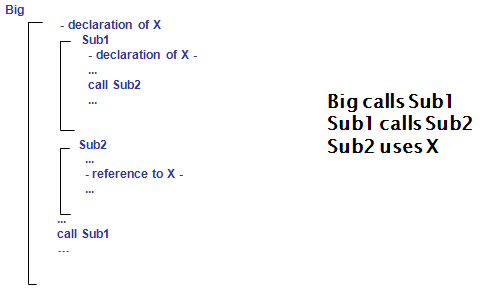
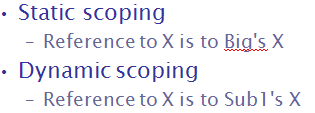
Dynamic Scope:
follow execution path (The scope is determined on run time.)First, find from the current subprogram. (local declarations)
no way to protect local variables from access by another active subroutine
access to nonlocals is slower
Example 1. If big call sub2 and sub2 call sub1, then x in sub1 is referenced in the declaration of sub2.procedure big;
var x : integer; <----declare x in big.
procedure sub1;
begin {sub1}
...x.... <---- reference x
end; {sub1} There is no declaration of x in sub1.
procedure sub2;
var x : integer; <---- declare x in sub2.
begin {sub2}
........
end; {sub2}
begin {big}
......
end; {big}
Scope and Lifetime:
When a procedure does not call other procedures, the scope and lifetime of a variable are similar.The referencing environment of a statement is the collection of all names that are visible in the statement
When a procedure calls other procedures, the scope and lifetime of a variable are different. See the following example.The scope of sum does not extend to the body of printheader(). It is only in compute().void printheader() //Page 207
{
....
} /* end of printheader */void compute()
{
int sum;
....
printheader();
} /* end of compute */
The lifetime of sum extend over the execution time of printheader(). The storage bound until whole compute() completed. It includes running printheader statement.
Referencing Environments of a statement:
A collection of
all names that are visible in that statement.
see pages 235 and 237.
program example; Referencing EnvironmentThe following example main calls sub2, sub2 calls sub1.
var a, b : integer;
...
procedure sub1;
var x, y : integer;
begin ( sub1 )
.... <------------- x,y of sub1, a,b of example
end; ( sub1 )
procedure sub2;
var x : integer;
....
procedure sub3;
var x : integer;
begin ( sub3 )
.... <------------ x of sub3, (x of sub2 is hidden), a,b of example
end; ( sub3 ) x,y of sub1 are not referenced since sub1 is not a static ancestor of sub3.
begin ( sub2 )
.... <------------ x of sub2, a,b of example
end; ( sub2 )
begin ( example )
.... <------------ a,b of example
end; ( example )
void sub1() Referencing Environment
{
int a, b;
... <------------ a,b of sub1, c of sub2, d of main,
} /* end of sub1 */ (b of sub2, c of main are hidden)
void sub2()
{
int b, c;
... <------------ b,c of sub2, d of main, (c of main is hidden)
sub1;
} /* end of sub2 */
void main()
{
int c, d;
... <------------ c,d of main
sub2;
} /* end of main */